|
Search
Search for Authors
Newsletter
Featured Authors
Europa Tweets
|
- You are here: Home | About us
Europa Editions is a New York-based publisher of literary fiction, high-end mystery and noir, children’s illustrated fiction, narrative non-fiction, and memoir. Approximately two-thirds of the titles on our list are works of literature in translation.
Europa Editions was founded in 2005 by Sandro Ferri and Sandra Ozzola Ferri, who are also the owner-publishers of Rome-based Edizioni E/O, one of Europe’s most prestigious independent publishing houses. Our idea was to capitalize on Edizioni E/O’s decades-long experience to bring fresh voices to the American market and provide quality English editions of international literature by enlisting some of the best translators in the business. Our appearance would be distinct, incorporating both European and U.S. jacket design standards. Our publishing endeavor would be as much a cultural enterprise as a business venture, convinced, as we are, that dialogue between nations and cultures has never been more important than now, and that this exchange is facilitated by literature chosen not only for its ability to entertain and fascinate, but also to inform and enlighten. To this end, Sandro and Sandra were joined by veteran publisher Kent Carroll, formerly editor-in-chief at Grove Press and founder-publisher at Carroll & Graf. Kent acquires original titles in English, giving our list a truly transatlantic flavor, and heads up our offices, located in Union Square, New York.
In North America, we are distributed by Penguin USA and Penguin Canada
In the U.K. and Ireland, we are distributed by Turnaround Publisher Services.
We invite you to browse our growing list of international fiction and non-fiction.
Sign up for our newsletter, in which you'll find information on new releases, reviews, and other Europa Editions news.
What they're saying about Europa Editions
Staff
Contact Us
Europa Editions is:
Sandro Ferri, editorial director and founder, was born in New York in 1952 to an Italian father and an American mother. He has lived and studied in both France and Italy. In Rome, Italy, in 1979, he founded the publishing house Edizioni E/O, whose catalog features a wide selection of authors from all corners of the world. In 2005 in New York, he founded Europa Editions, publisher of international authors in English. The goal of Europa Editions is to create a list where readers can find a selection of the best international authors in quality English translations. (Read an interview with Sandro Ferri from Bookshop magazine.)

Sandra Ozzola Ferri, editorial director and president. Born in Northern Italy in 1949, Sandra Ozzola studied languages and literature both at high school and university, where she majored in Slavic languages. She moved to Rome in 1969 to continue her studies. In 1979, together with Sandro Ferri she founded the Rome-based publishing house Edizioni E/O, where she is now editorial director and manager, and in 2005 she and Sandro Ferri founded Europa Editions.

Kent Carroll, publisher, was the editorial director of Grove Press from 1975 to 1981. In 1982, he co-founded Carroll & Graf, where he was both publisher and Editor-in-Chief. He has been working as publisher for Europa Editions since its foundation in 2005.
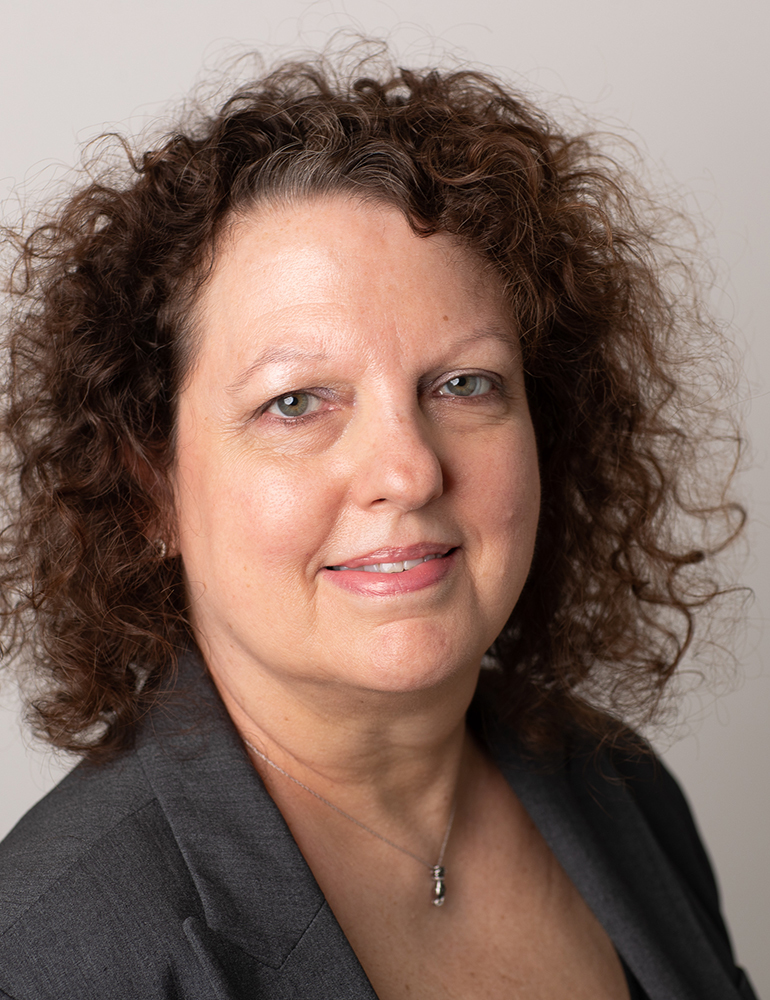
Karin Wessel, global sales and marketing director, was born in 1971 in the Netherlands. She studied History and Philosophy at the University of Utrecht and the University of Lund (Sweden). She began working for Edizioni E/O, where she was responsible for publicity and foreign rights, in 2001. Since 2005, she has been working full time for Europa Editions. She travels frequently between Rome and New York, developing our rapport with distributors and bookstores and managing international public relations.
Michael Reynolds, editor in chief, was born in Australia in 1968. He now lives in Rome, Italy. In addition to his work as an editor he has also translated three books by Carlo Lucarelli for Europa Editions, Daniele Mastrogiacomo's Days of Fear, and children’s fiction by Altan and Wolf Erlbruch.
Simona Olivito, production manager, is a graduate of Umberto Eco’s masters program in publishing and a specialist in Anglo-American literature. She coordinates Europa's editorial and production aspects and relations with our many translators.
Gianluca Catalano, sales and marketing assistant, is a native of Salerno (Italy), birthplace of esteemed physicians, daring seamen, and male models. Born in 1975, he shares the day and month of his birth, 7 March, with Alessandro Manzoni and Bret Easton Ellis. A fencing prodigy, after an appalling mishap, he dedicated himself to the care and maintenance of two-stroke motorbike engines. After graduating high school he moved to Siena where, in addition to a degree in History, he also obtained a much-desired international chef’s diploma. Following graduation he spent several years between Milan and the Mediterranean, where he worked as a skipper. In 2003, he arrived in Bologna where, as a student of Umberto Eco (he rocks!), he completed his masters in Publishing at the Institute of Higher Studies in Humanities. From 2003 to 2005, he worked at the RCS publishing group, and then finally realized his dream of moving to Rome to work for Edizioni E/O, where he currently tenders his matchless talents. Cook, trumpet player, drummer, and amateur photographer, he is currently organizing a two-wheeled invasion of Latin America. May God have mercy on him!
Julia Haav, editorial assistant, has lived, worked and studied in Accra, Ghana; Guanajuato, Mexico; San Francisco; Seattle and New York. She received her Bachelor of Arts in cultural anthropology at Barnard College, Columbia University and is a Master’s candidate in the humanities, with a focus in literature, at New York University. She has been with Europa since early 2009 .
Rosa Finamore, accounts and administration. Born in 1982 at the foot of Mount Vesuvius in Naples, Rosa later moved north to Latina, where she studied Economics. She began working for Edizioni E/O in 2005, the same year in which Europa Editions was founded. She is now responsible for overseeing all accounting and administrative issues pertaining to Europa Editions. She is an enthusiast of ancient history and mythology.
Vanessa Sparling, publicist.
Europa Editions in the press
“A new and, on first evidence, excellent source for European fiction for English-speaking readers.”—Janet Maslin, The New York Times
"A godsend for those into contemporary European writing."—New York Magazine
“You could consider Europa Editions, the sprightly new publishing venture [Kent Carroll] has just started in New York, as a kind of book club for Americans who thirst after exciting foreign fiction.”—LA Weekly (read complete article)
"Europa Editions . . . is good news if you’re a lover of crime novels.”—National Public Radio
“Best New Crime Imprint, 2005.”—Booklist
“Readers with a taste—even a need—for an occasional inky cup of bitter honesty should lap up The Goodbye Kiss . . . the first book of Carlotto’s to be published in the United States by the increasingly impressive new Europa Editions”—The Chicago Tribune
“To insist that if work is good, no matter what, people will read it? Crazy! But perhaps that’s why I like Europa . . . They believe in what they are doing above everything. Viva Europa Editions!”—Alice Sebold, author of The Lovely Bones (read complete text)
“Europa Editions has its first indie bestseller, Elena Ferrante’s The Days of Abandonment.”—Publishers Weekly
“The best of [Mediterranean noir] is making its way to the United States via publishing houses such as Europa Editions.”—Boston Phoenix (read complete article)
"Europa Editions, a small press founded just five years ago, has been doing the Lord's work in terms of introducing European literary novels, many of them in translation, to an American readership."—Maureen Corrigan, NPR's Fresh Air
“[Europa Editions offers] a distinctly different brand of literary pleasure, thoughtfulness and, yes, even entertainment.”
—The Ruminator
"A mix of readability and provocation is apparent in Europa Editions' list. Europa does the unthinkable in today's publishing climate: it successfully publishes literature in translation and books that happen to be particularly slim – works that can be read in a couple of sittings, like Algerian-Italian author Amara Lakhous' Clash of Civilizations, or Belgian author Amélie Nothomb's Tokyo Fiancée."—Hirsh Sawhney, The Guardian
"If you ask independent booksellers to name publishers they respect, one name that surfaces is Europa Editions. They publish high-quality literary fiction, primarily European in translation, as well as original British and American work, that is both well-written and entertaining."—Richard Krawiec, The News and Observer
“Europa Editions invites English-speaking readers to ‘experience all the color, the exuberance, the violence, the sounds and smells of the Mediterranean,’ with an intriguing selection of the crème de la crème of continental noir.”—Murder by the Bye
“I have customers who have read everything Europa Editions has published and want to know what they’re doing next . . . Congratulations on the great success of Europa Editions—they are flying off our shelves.”—Toby Cox, Three Lives & Co., New York
"I think that Europa is doing a great job with books that are entertaining and thought-provoking. They've become one of the imprints that I feel I can trust almost implicitly. Even if the subject matter isn't to my taste (or what I think is my taste), I have an expectation of quality that has yet to be disappointed. It makes my job much easier, both at the buying end and when making recommendations to customers."—Billie Bloebaum, Powell's Books
"We have a lot of faith in Europa's editorial sensibility.”—Sarah McNally, McNally Jackson
from Bookshop
May 2005 (pp. 24-27)
Interview with Sandro Ferri
by Anna Ardissone
Courageous Moves that Reap Rewards
by Anna Ardissone
From e/o to Europa Editions, Sandro Ferri’s publishing odyssey lands on American shores.
In 1919, his maternal grandfather left The Abruzzi to work as a bricklayer in America. In 1947, his father left Umbria to sell bed linen in New York, where a few years later he met his future wife at a boxing match. There seems to be a tradition of going abroad in Sandro Ferri’s family. The man behind Italian publisher edizioni e/o has now decided to embark for America. But beyond personal reasons and family tradition, Ferri admits that globalization necessitates certain changes in the ways we live and work. Europa Editions, U.S. imprint of edizioni e/o, is fruit of these changes. The American affiliate was born with the idea of introducing broad readerships to publishing standards typical of small publishers and in the hope of reaching new English-language readers. Several months shy of the project’s U.S. launch, Sandro Ferri speaks about the challenges to come.
How was the idea of “exporting” edizioni e/o to the United States born?
Obviously, it is very satisfying to see the books we choose as editors translated into English, which is undoubtedly the most diffused communication instrument in the world today. The United States is already an enormous market, but apart from North America, there are hundreds of millions of people in the world who read English. We decided it would be better to enlarge our sphere of activity rather than limit ourselves to fighting for space in a market that is already overfull. But we also had a desire to learn. The American publishing system is very interesting. It is, in many ways, more advanced and organized than ours but it is also full of intriguing surprises: niche readerships of every shape and size, unexpected human and cultural resources, a wealth and range of astounding experiments and innovations in the book trade. There is a lot to learn. The reality is far from the stereotype of dumb Americans buying their bestsellers at the supermarket.
Who is involved in running the U.S. affiliate?
We have been really fortunate in this regard. We managed to find an exceptional and very professional figure to run our office in New York. Kent Carroll has over thirty years of experience in publishing, first as editor-in-chief at the legendary Grove Press and then as publisher-owner of Carroll & Graf, which he recently sold. He is a great editor and publisher. He keeps an eye out for new and interesting titles in English, and he does an excellent job representing us in the U.S., knowledgeably getting our European, African, Middle Eastern, Mediterranean messages out there.
But we are also hard at work in Italy. Many of us at e/o also work for Europa Editions. Karin Wessel, born in Holland, who speaks German, English, Italian, French, and Dutch, of course, has worked for years at edizioni e/o in our press office. She now travels back and forth between New York and Rome, handling Europa Editions writers and maintaining contact with our distributors and sales reps in America. There’s Michael Reynolds, Australian, with years of experience working in America, who oversees production and editorial. There’s Simona Olivito, graduate of Umberto Eco’s masters program in publishing and specialist in Anglo-American literature, who coordinates our editorial and translation schedules, in addition to handling contracts and relations with our many translators. There are the legendary Scottish sisters who typeset our books at our Rome printer. My wife Sandra and I decide which books will be translated and we direct the project. Then there are people who essentially work for edizioni e/o, but who each contribute to the success of this difficult enterprise. Alfredo Lavarini, for example, who has been chief of production at e/o for many years, now also oversees the production aspects of Europa Editions, holding the whole thing together with his professionalism and his thoroughness. Almost everyone at e/o is involved in Europa Editions in some way or another.
When will the first titles be available?
This endeavor entails an enormous amount of work, much more than what we expected. The first books will be out in September 2005: The Days of Abandonment by Elena Ferrante and a very funny novel nominated for the Booker Prize entitled Cooking with Fernet Branca by English writer James Hamilton-Patterson. From the economic side of things, we are always with our backs to the wall, let’s say. There are certainly very definite limits to our financial resources, as we decided not to rely on the support of powerful public or private conglomerates so as not to compromise our independence. The business is 100% ours. We do our best to economize, but obviously we also have to invest rather liberally, we don’t want our project to be marginalized due to lack of capital. We would like to publish about fifteen books a year, and in the first two or three years we will be investing several hundred thousand euros.
This is a difficult challenge in a market that is already saturated . . .
In a saturated market, I believe one must publish only those books that are “necessary.” By necessary, I intend books that are undeniably important for one reason or another. I mean, why shouldn’t the American public have the opportunity to read Massimo Carlotto and Jean-Claude Izzo? Why shouldn’t books like Minotaur and I Loved You for Your Voice, so dearly loved by Italian readers and so indicative of Mediterranean culture, be available in English? Why shouldn’t American readers enjoy great Mediterranean authors such as Elena Ferrante, Ioanna Karistiani or Alicia Gimenez-Bartlett? We decided to publish books that we like and that hundreds of thousands of readers in Europe and in other countries enjoyed. What we offer our authors, on the other hand, is a publishing vehicle guided by people who know European literature well, who respect this tradition and who guarantee top quality translations. Furthermore, our authors know that they are part of a family whose strength is in numbers, giving each member a better chance at making themselves known to American readers. The publication of individual titles forms part of a bigger project with roots running deep on this side of the Atlantic.
How did you decide the print runs? Have you changed the graphic design of your books?
We still have to make a final decision on the number of books that will be printed in the first printings. We sent hundreds of advance readers copies to bookstores. We meet the sales reps later this month and together we will decide the final numbers. Nonetheless, I think we will be starting off with a run of about 10,000 copies. As far as the graphic design is concerned, we want to remain faithful to our Italian look. A lot of people like “Italian style” so we’re sticking with that. But we have also made some modifications to meet the demands of the American market and the expectations of American readers.
Who is taking care of distribution for you in the States?
Our distributor, Consortium, is very interesting. The people there are very well-organized and very professional but at the same time Consortium is a distributor with a human side, a distributor that focuses on small, independent publishers, that pays attention to content and that responds positively to our enthusiasm and energy. They are a relatively small distributor, but they manage to reach the main chains, the bulk buyers, the libraries, all the independent bookshops (with whom they have a special relationship) and thousands of alternate points of sale (specialized shops, supermarkets, paper stores, etc.).
How was news of Europa Editions received in the U.S. and in Europe?
In the United States, some large publishers that occasionally publish foreign authors were skeptical. They don’t have much faith in translated books (particularly because translations cost much more there than they do here). But it’s precisely this attitude that confirmed our decisions. We encountered a similar response twenty-five years ago in Italy when we started publishing authors from eastern Europe. “They don’t sell,” the large publishers said. “People aren’t interested.” In reality, their attempts had always been sporadic, haphazard, without any real conviction, and the same thing is true about foreign literature in the U.S. now. With the exception of university or highly specialized houses that publish select authors who are perhaps not suited to larger audiences, the publication of international fiction is limited to a few, very famous writers, and even then it tends to be quite haphazard. It largely depends on personal contacts and the decisions of literary lobby groups. There are notably few editors working for New York publishers who speak a second language and even fewer who have long-range, well-planned foreign fiction publishing programs.
I believe this is why many American readers have happily welcomed news of Europa Editions. There are lots of people in the United States who are curious about the world, who resist isolation, and who want to understand Europe and the Middle East. Literature is a passport with which one can enter the minds and the hearts of other human beings. Many Americans are helping us. The translators, obviously, are happy. Some wonderful, well-known writers, like Alice Sebold, are helping us by contributing their enthusiasm and their willingness to spread news of our project. The first, pre-launch reactions to our books have been very positive.
In Europe, in Africa, in the Arab world, our project has been welcomed with enormous enthusiasm. It offers writers the possibility of speaking with America directly, of entering into their market. The fact that this project was launched by people whose roots and sympathies are situated not just in Europe, but in the Mediterranean and the third world, is particularly appreciated.
Edizioni e/o’s adventure began in Italy in 1980. Could you give us an assessment of the first 25 years?
In the beginning, there were four of us and now we have fifteen people working in our editorial offices, plus tons of external collaborators. But I have always wanted to maintain a certain level of quality, not only where our books themselves are concerned but also the way in which we produce them. It is a particular way of being a publisher that I want to maintain, a style that may be defined as independent, even experimental; anyway, that prioritizes variety and diversity. These days it’s more difficult than ever to operate in this way. The market pressures to lower qualitative levels are extremely strong; so, too, are the efforts to chase anyone who does not spend all their energies producing bestsellers from the market. I don’t like a lot of what I see around me these days: a few giant publishing groups control the markets, conglomerates discount their products to an extent that smaller publishers can’t compete, there is a general flattening out of the cultural landscape. However, there are also positive developments, and with them, possibilities that would have been unthinkable in the past.
An assessment of these past twenty-five years? Positive, but we will be able to make a real accurate assessment in a few years. If we are still in the game, and if we manage to grow while remaining faithful to our origins, then I will consider our endeavors successful. The battle is underway.
How has your work as publisher changed over the years?
The work of a publisher has changed a lot. Today we compete with big publishers in the field of quality fiction. And when we try to gain new ground, we are quickly chased down. Big publishers with greater economic resources than ours tend to lure young, talented editors away from small publishers. For the small or mid-sized publisher it is difficult to make new discoveries and harder still to defend them from the pillaging done by large publishing groups. But it’s not really the competition that scares or embitters us - particularly because we have good relationships with our authors and they usually want to remain with us - but the fact that some of these big groups rely exclusively on the might of money and the strength of their economic positions. In this way, they ruin the market.
Edizioni e/o is unusual to the degree that you have a great number of long sellers in you catalogue. Has this helped you ride out the current publishing crisis?
The long seller is our saving grace. Fifty percent of our sales come from our backlist. Some titles in our pocketbooks line have been selling 5 to 10 thousand copies every year for the past ten years. Nonetheless, today the culture of the bestseller and the “next big thing” dominates publishing. But what can you do? It is an enormous force that pushes everything toward a kind of clumping and conformity of choice and of taste. It’s necessary to resist by encouraging the sprit of rebellion and anti-conformism present in many readers, by urging and supporting counter tendencies, independence, and the autonomy of both booksellers and publishers.
What kind of relationship do you have with booksellers?
We are fortunate to have an excellent relationship with booksellers. I say this sincerely and I think I even have an explanation: we do not publish for a “literary” elite, for prizes, or for the critics. We publish books for readers. In this sense we are a strange publisher, because our readers appreciate the literary quality but also the readability of our books. We are simultaneously snobs and populists. We think about our readers first, and hope that they will love the books we offer. I think bookstores appreciate this choice because it allows them to sell a lot of our books, relatively speaking, while maintaining a high literary level. The bookstores that really count for us are those that give priority to small and mid-sized, independent publishers, those bookstores interested in making new discoveries rather than following trends and diktats decided by large publishing conglomerates. We appreciate booksellers who make personal choices and who take risks. If they want their stores to be places that attract readers, places where one might discover something new or out of the ordinary, I think this the only way.
Some of your authors have won important literary awards. Does winning an award help sales?
We have never won any of those prizes that “sell books.” It’s almost impossible for a small or mid-sized publisher to win these kinds of awards, since they are virtually the exclusive domain of publishers possessing the means with which to put pressure on selection committees etc. Literary quality has little to do with it.
You were among the first publishers in Italy to enter into the market of film adaptations. Can you give us an idea of what we can expect in the near future?
In September, Robert Faenza’s adaptation of The Days of Abandonment is due out, with Margherita Buy, Luca Zingaretti and Goran Bregovic. In 2006, we’ll see film adaptations of two books by Carlotto, The Goodbye Kiss, directed by Michele Soavi, and The Obscure Immensity of Death, directed David Ferrario. Both have great casts and good distribution, so we expect positive results. In 2007, the film version of The Lovely Bones is due out, directed by Peter Jackson, director of Lord of The Rings and King Kong.
Mediterranean Noir is one of the literary genre’s that has contributed to the growth and visibility of edizioni e/o…
We are proud at having “invented” Mediterranean noir together with one of our authors and good friend, Massimo Carlotto. “Invented” in the sense that, beginning with Jean-Claude Izzo’s wonderful books, we were the first to identify and coherently developed the trend that would eventually come to be labeled Mediterranean Noir. We worked a lot with Massimo Carlotto on developing this line, discovering authors and organizing debates and conferences. This is our typical way of working: we individuate an area, a genre, a literary tendency and then dig as deep as possible; we make a selection and then tenaciously propose these writers to our public, even when it means going against the trend.
When is a small publisher no longer a small publisher?
We are growing. By now, I suppose, we ought to be considered adolescents. And I have the impression that we will remain this way forever, with all the enthusiasm, waves of emotions and euphoria that this age brings with it, but also the struggles, and the suffering that it generates. To grow remaining youthful - this is our challenge - to remain passionately attached to the spirit of small, independent publishing, but to publish big-time authors. Currently, our publishing house is going through a tumultuous period of transformation and we often look enviously at the robust structures of big publishers where everything is well-organized, the work is appropriately divided and everyone knows what their specific role is. But then we look back nostalgically to the old days when we were starting off - the disorganization, the freedom, the time at our disposition - and we are convinced that that is our goal, the reason for which we got started in this field, the real reason for which we became publishers. We mustn’t lose our passion along the way. Perhaps a publisher stops being a small publisher when he or she no longer has passion.
|